

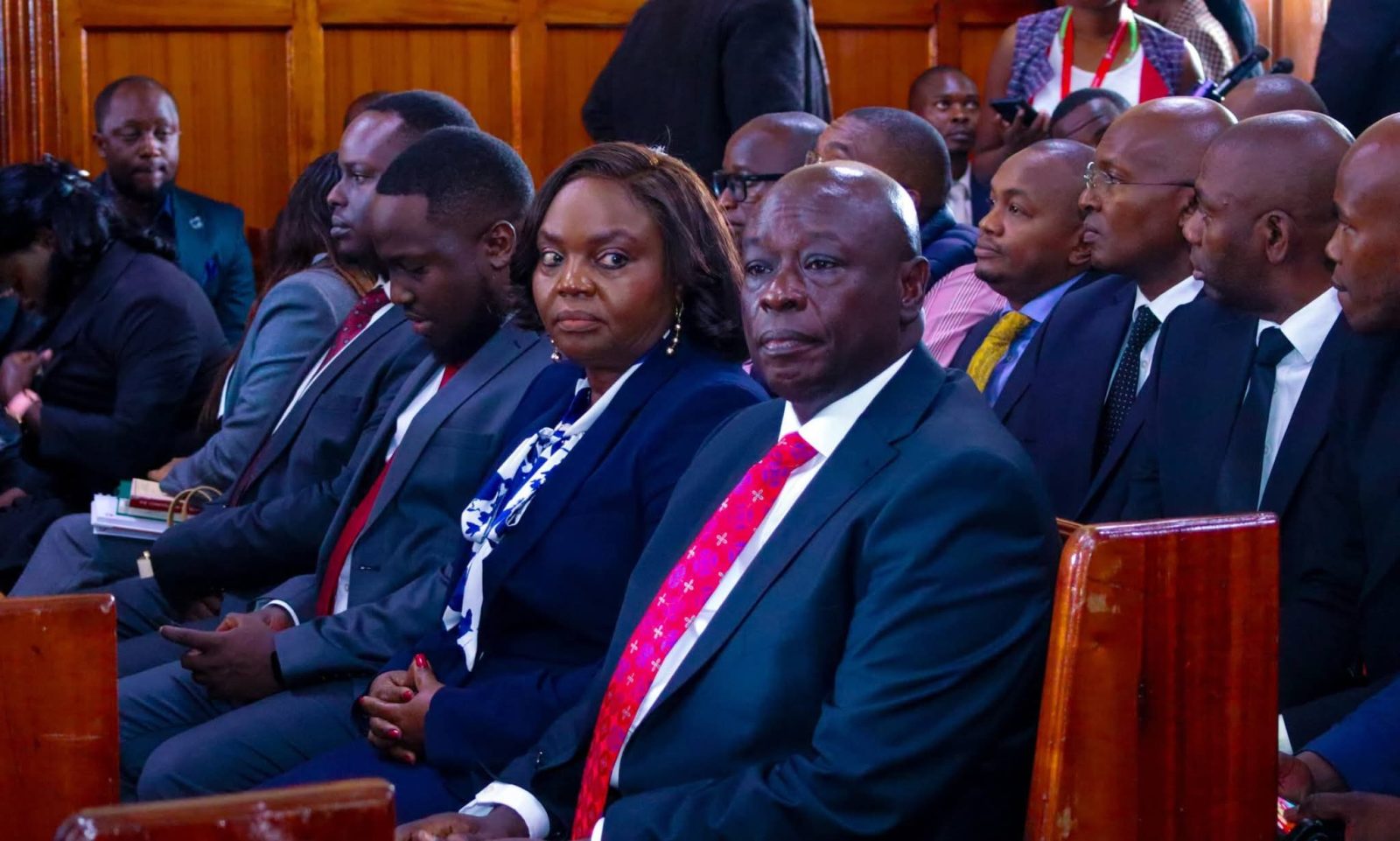
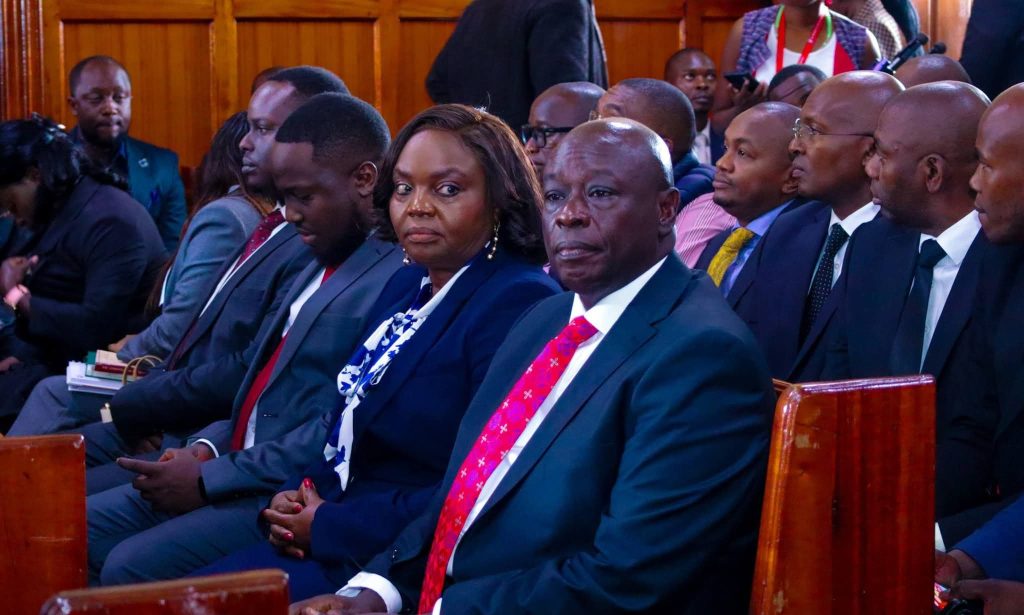
Former Deputy President Rigathi Gachagua has dropped his bid to be reinstated to office, shifting his legal challenge against impeachment toward compensation and a declaration that the process used to remove him was unconstitutional.
His lawyer, Paul Muite, told a three-judge bench sitting at the Milimani High Court that the petition has been amended and will no longer pursue a return to office.
Instead, the case will focus on whether the impeachment met constitutional standards and whether Gachagua is entitled to damages and retirement benefits.
The bench, comprising Erick Ogolla, Anthony Mrima and Frida Mugambi, is now expected to determine whether due process was followed in proceedings that led to the removal of one of the country’s highest-ranking officials.
Mr Gachagua was impeached following a parliamentary process in which lawmakers upheld several charges, including allegations of constitutional violations, misconduct and abuse of office.
He has consistently denied the accusations, describing the process as politically motivated and legally flawed.
His legal team argued that the impeachment did not meet the threshold set out under Article 151 of the Constitution of Kenya, which outlines the procedure for removing a deputy president.
They said the process was conducted in a manner that undermined fairness, transparency and public participation.
“The petitioner has abandoned the prayer for reinstatement as Deputy President,” Muite told the court, adding that the focus is now on remedies arising from what he termed an unconstitutional removal.
Lawyers for Mr Gachagua told the court that the public was not adequately involved in the process, arguing that citizens were only presented with allegations from the National Assembly without being given the former deputy president’s response.
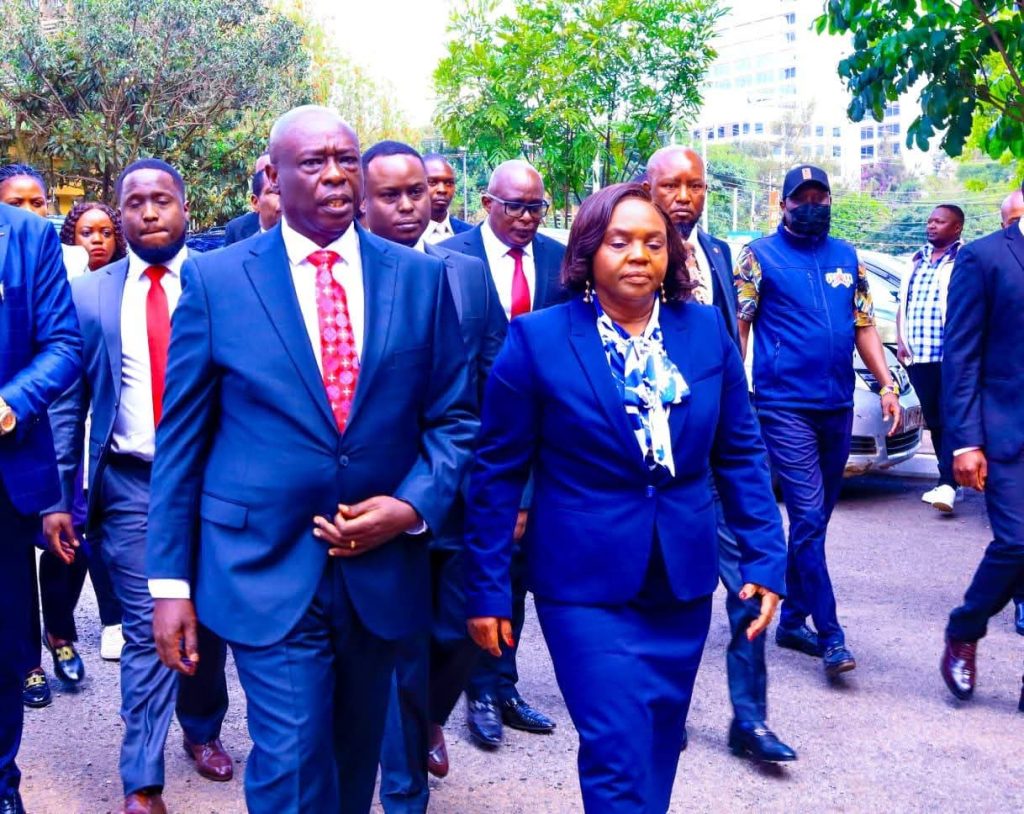
Former Deputy President Rigathi Gachagua and his spouse, Dorcas Rigathi, at the Milimani High Court on Monday, April 27, 2026. Photo/ Courtesy
They said this, in their view, fell short of constitutional requirements for public participation in major state decisions.
The legal team also challenged the manner in which the impeachment proceedings were conducted in Parliament, saying they were rushed and procedurally irregular.
According to the petition, key stages of the process did not allow sufficient time for scrutiny of the charges or for a proper defence to be mounted.
Another argument raised in court is that the constitutional provisions governing impeachment were not properly applied.
Muite told the judges that the rules set out in Article 151 cannot be applied retrospectively and must strictly guide any attempt to remove a sitting deputy president during their term.
The former second-in- command is asking the court to award him remuneration and benefits he says he lost following his removal from office, as well as damages.
Under the Retirement Benefits (Deputy President and Designated State Officers) Act, a retired deputy president is entitled to a pension equivalent to 80 percent of their last salary, along with a lump sum based on years served.
A sitting deputy president earns a gross monthly salary of about Sh1.2 million.
The law also provides a range of additional benefits, including official vehicles, medical cover for the officeholder and their immediate family, diplomatic passports and access to VIP airport facilities.
It further entitles a former deputy president to a support staff that includes drivers, administrative personnel and security.





Leave a comment