

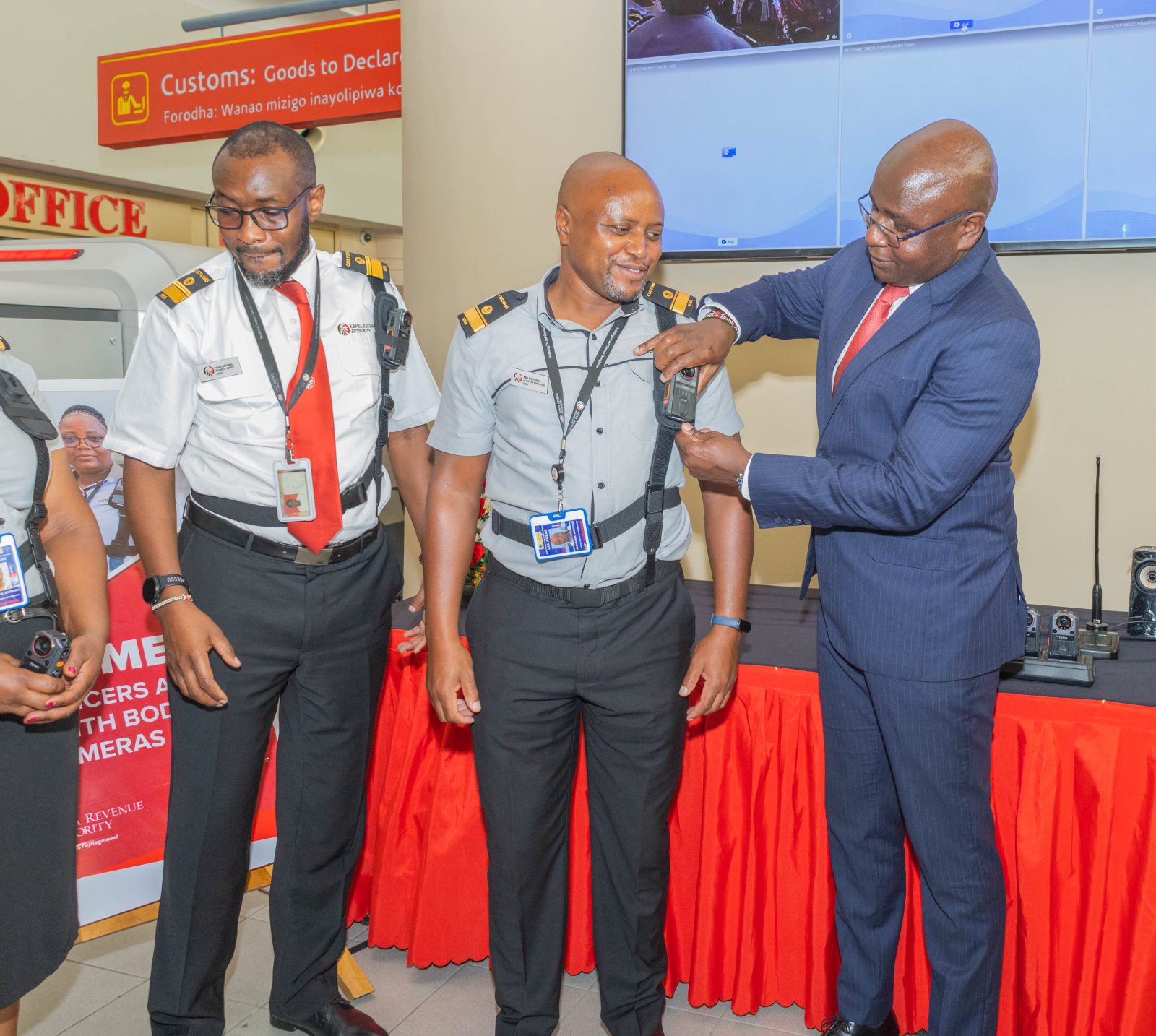
The Kenya Revenue Authority (KRA) has rolled out 350 body worn cameras across the country, becoming the first tax administration in the region to use the technology at this scale.
The cameras will be used by customs and border control officers at border points to record interactions with the public, collect evidence during operations, and improve professionalism and transparency.
Speaking during the launch, KRA Commissioner General Humphrey Wattanga said the cameras will help improve service delivery and strengthen trust between officers and the public.
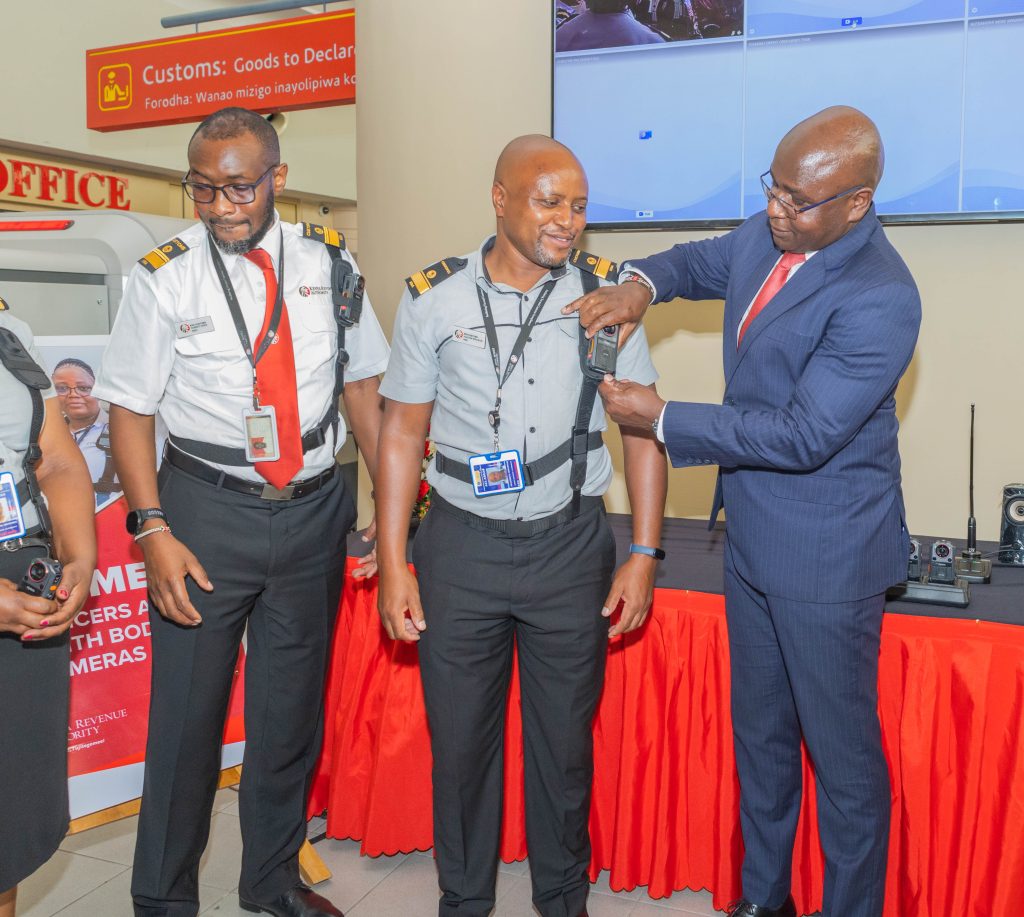
“Real-time recording will enhance accountability, promote transparency, and build mutual trust in the way we secure our borders and serve the public,” he said.
Wattanga added that the move is not just about technology but also about promoting integrity and professionalism within the authority.
The cameras are supported by four data storage servers, integrated docking stations, and a newly established Central Command Centre that will monitor and manage recorded footage.
They also feature real-time GPS tracking, LTE connectivity for live streaming, and secure recording capabilities.
According to the Principal Secretary for the State Department for Aviation and Aerospace Development, Teresia Mbaika, the government is committed to strengthening systems that support legitimate trade while tackling illegal activities.
“When technology, integrity, and collaboration come together, we create borders that are both secure and efficient for trade and travel,” she said.
Commissioner for Customs and Border Control Lilian Nyawanda noted that the cameras will help officers handle increasingly complex enforcement situations.
She said customs officers often face organized smuggling networks and challenging environments where lack of real-time evidence has sometimes slowed investigations.
The cameras will now allow officers to record, livestream, and securely store audio-visual evidence for investigations and prosecutions.
Customs officers will be required to wear the cameras during passenger clearance at international airports, inspection of goods at seaports and inland container depots, operations at One Stop Border Posts, and during patrols and surveillance activities.
The system was officially launched at Jomo Kenyatta International Airport (JKIA).
The project was implemented with support from the World Bank as part of broader efforts to strengthen coordinated border management.
The rollout signals a new push by KRA to modernize border operations, improve accountability, and better protect Kenya’s borders as global trade and cross-border movement continue to grow.

















Leave a comment