


The National Treasury says it will appeal against a High Court decision that nullified the government’s sale of a 15 percent stake in telecommunications company Safaricom to South Africa’s Vodacom.
The three-judge bench ruled on Tuesday that the divestiture had breached the Constitution and the law, and ordered the shares to be restored to government ownership.
The court found that the government had failed to provide adequate and meaningful public participation and had concealed or misrepresented material information about the transaction.
It also ruled that the deal, presented as a partial divestiture, effectively amounted to a merger, acquisition and takeover that gave Vodacom effective control of Safaricom.
The transaction involved the sale of the government’s 15 percent stake for about Sh204billion, while a further Sh40.2billion was paid upfront for rights linked to future dividends from the government’s remaining 20 percent holding.
Treasury to challenge ruling
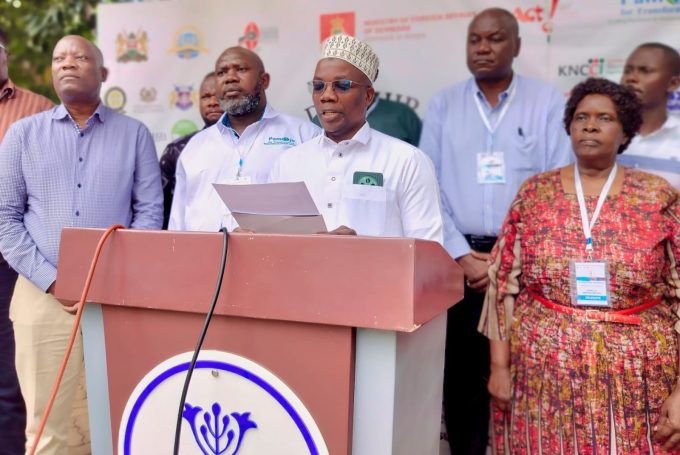
Treasury Cabinet Secretary John Mbadi said the government had already filed its intention to appeal.
“The National Treasury remains confident that the process follows the law and is in line with prudent financial management,”Mbadi said.
He said the transaction had been approved by the Cabinet and scrutinised by Parliament, arguing that it had been designed to raise funds for national infrastructure while preserving Safaricom’s strategic importance.
The government had argued that the transaction included safeguards for Safaricom employees, dealers and business partners.
Parliament’s committee considering the deal said it had received submissions from 43 organisations and held public participation hearings in 30 counties.
Mbadi rejected the court’s finding that the public participation and other safeguards were inadequate.
“We do not accept that the safeguards built into these transactions… amounted to the constitutional and procedural failures as the court has asserted,” he said.
“We intend to make that case fully on appeal.”
Court’s concerns
The court said crucial information about the transaction had not been made available to the public, Cabinet or Parliament.
It also raised concerns about the national-security implications of transferring effective control of critical telecommunications infrastructure to a foreign company.
The judges said Safaricom operates infrastructure and services of national importance, including mobile money and government platforms, and holds personal data belonging to millions of Kenyans.
The court also quashed the approval contained in Sessional Paper Number Three of 2025, which had been approved by the National Assembly.
Government defends economic policy
Mbadi also used the briefing to defend the government’s wider management of Kenya’s public finances.
He said the government had used debt-management measures to reduce pressure from large debt repayments due in the coming years.
According to Mbadi, the government had restructured some liabilities to reduce the concentration of debt maturities in 2027 and 2028.
He also defended the use of Article 223 of the Constitution to authorise spending, saying KSh86bn of expenditure cited in recent discussions related to liability management for a Eurobond.
Mbadi said the government had acted when market conditions provided an opportunity to manage the debt.
“We have made sure that we have smoothened the curve,” he said.
He also disputed reports concerning Treasury spending on security operations, saying the expenditure related to the leasing of government vehicles, including police vehicles, a function he said was domiciled within the Treasury.
Call for scrutiny of political promises
The Treasury secretary also called on journalists to subject politicians seeking public office to detailed questioning on their economic policies.
He said candidates should be asked how they would address public debt, unemployment, housing shortages and other economic challenges rather than simply being allowed to make broad promises.
“If I want to be president, like I want to be in future, ask me what I will do differently,” he said.
Mbadi said the government should also be held to account over policies such as healthcare, housing, agriculture and employment.
The government has defended recent economic measures, including increased lending to the private sector and efforts to extend the maturity of domestic debt.
These claims were made by Mbadi during the briefing.
Further public participation planned
Mbadi said the government would undertake another round of public participation before proceeding with a proposed legislative process affected by the court’s decision.
He said the exercise would begin in the first week of October, although it would be interrupted by his attendance at the IMF and World Bank meetings before resuming.
He said the government would then take the relevant legislation to the National Assembly, where further public participation would also be conducted.
The Safaricom transaction remains subject to further court proceedings. Vodacom has also indicated that it intends to appeal the ruling.













Leave a comment