

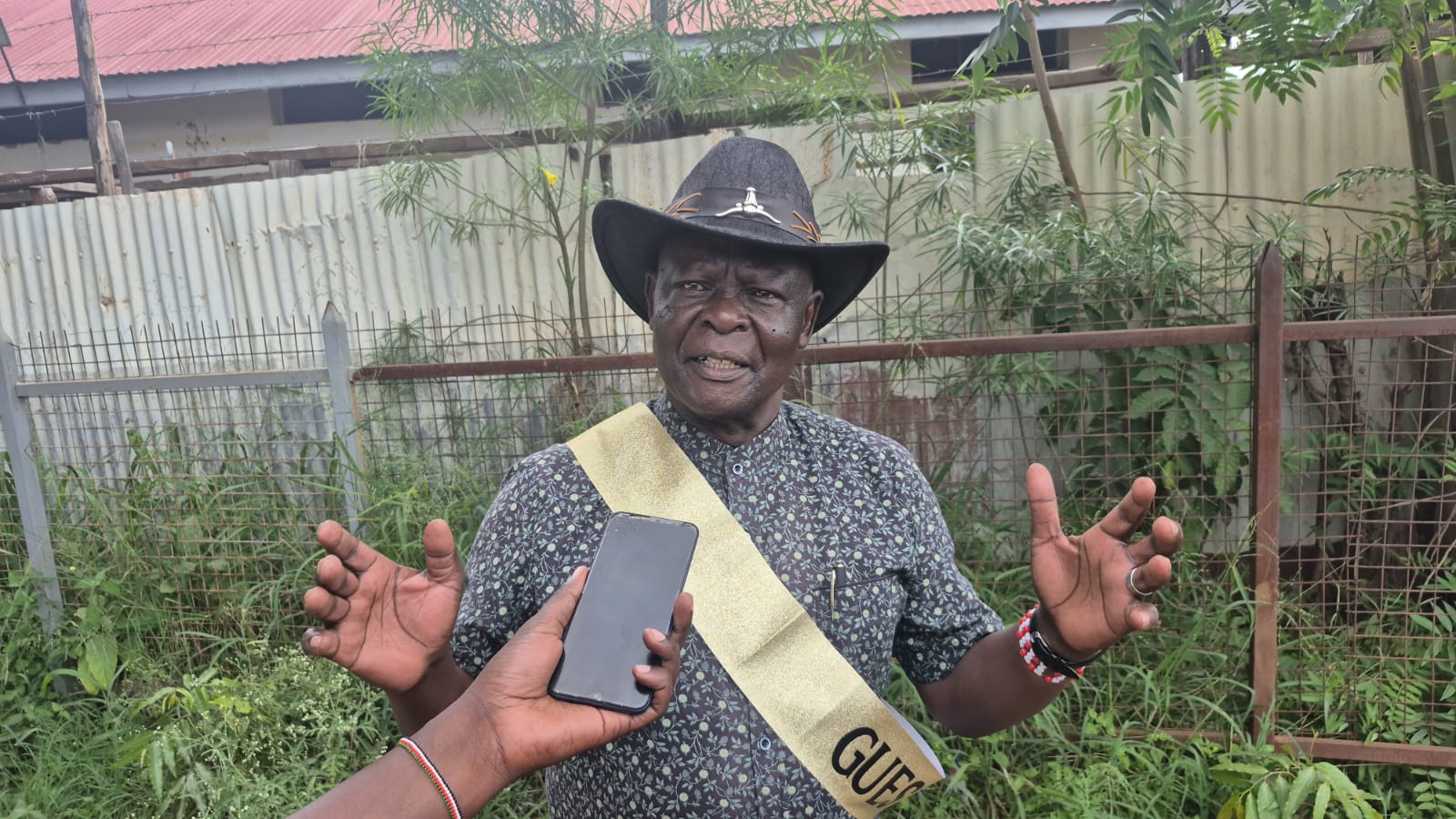
A senior university administrator has sharply criticized the practice of sending students home over unpaid fees, calling it unconstitutional and harmful to Kenya’s education system.
Uzima University Deputy Vice Chancellor for Administration, Finance and Planning said no learner should be denied access to education due to financial constraints.
Okal argued that the Constitution of Kenya guarantees every citizen the right to education, emphasizing that this right should extend up to the first university degree. He spoke during the annual general meeting at Kisumu Boys’ High School in Kisumu.
He cited constitutional provisions that make basic education a right and described a first degree as the modern benchmark for meaningful employment.
“It is troubling to meet students walking home after being sent away for fees,” he said. “The responsibility of funding education should not fall on the child but on the state, as clearly provided for in law.”
He questioned the logic of schools demanding full fees from students who have been absent after being sent home, asking how institutions account for lost learning time.

Okal called on the government and lawmakers to enforce policies that protect students from exclusion and to take action against institutions that violate these rights.
He also urged Parliament to re-evaluate funding structures and ensure education financing is aligned with constitutional guarantees.
While acknowledging recent reforms, he praised the new university funding model, noting that it follows the student wherever he or she is, promoting fairness across both public and private universities.
However, he raised concerns over fragmented bursary allocations managed by various political offices, arguing that such funds including NG-CDF allocations should be consolidated under one framework and channeled through the Ministry of Education for better accountability and impact.
He proposed a unified funding model where all education-related funds are placed under a single vote to support free education up to university level.“The money is there,” Okal said. “The only problem is how to spend it.”
He maintained that all Kenyans should have access to free education up to the first degree, describing it as the minimum requirement for securing employment in today’s economy.
Okal concluded by stressing that equitable access to education remains the country’s most powerful tool for social and economic transformation.















Leave a comment