


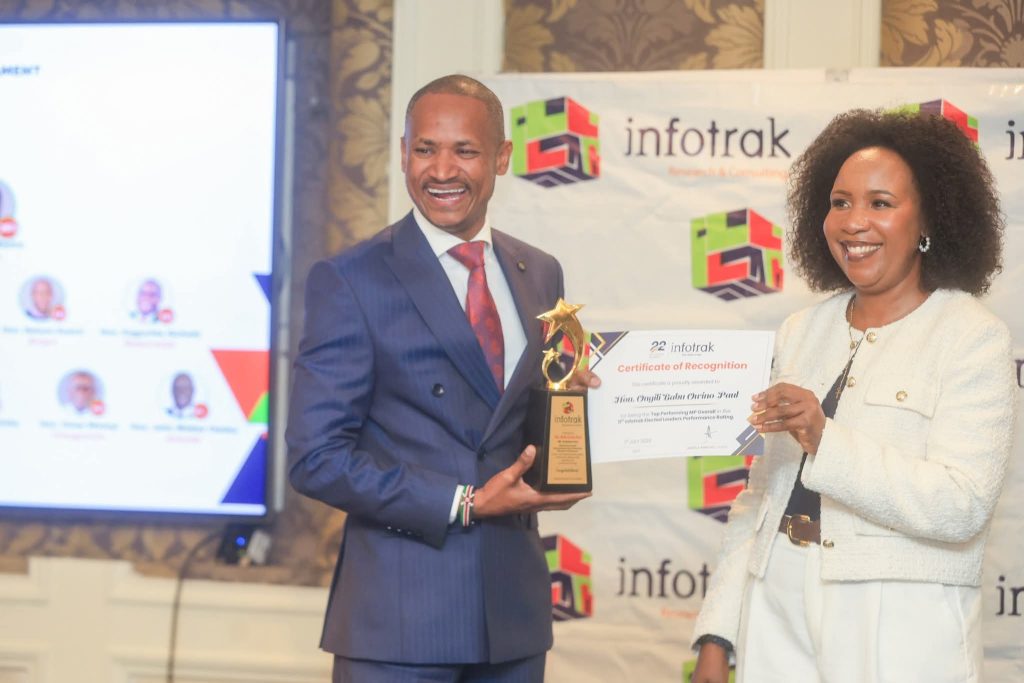
Embakasi East MP Babu Owino has been ranked Kenya’s best-performing Member of Parliament in the latest CountyTrak Performance Index 2026 released by Infotrak Research and Consulting.
The survey gave Babu an approval rating of 80 percent, the highest among MPs in the nationwide assessment of elected leaders.
Kabuchai MP Joseph Kalasinga was ranked second with 78 percent, while Kiharu MP Ndindi Nyoro came third on 76 percent,Taveta MP John Bwire also scored 76 percent, placing him among the top-rated legislators.
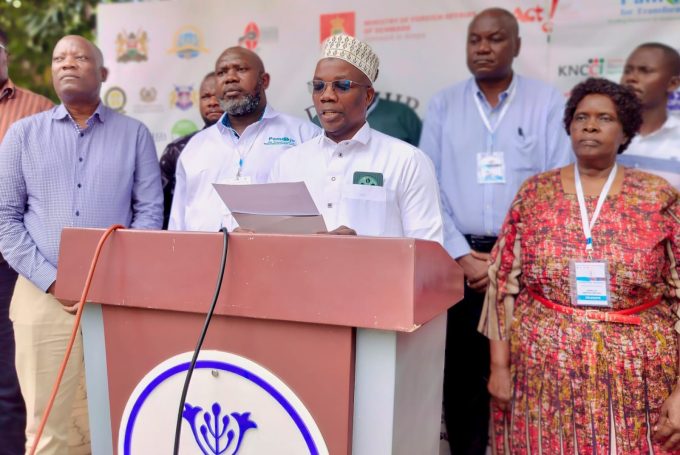
The findings were unveiled on Wednesday during the launch of the CountyTrak Performance Index 2026 at the Kempinski Hotel in Nairobi.
The report measures public perceptions of the performance of Members of Parliament, Senators and Women Representatives across Kenya.
It assesses elected leaders based on service delivery, accessibility, responsiveness and how well they meet public expectations.
Among those tied on 73 percent were Samburu West MP Josephine Lesuuda, Kimilili MP Didmus Barasa, Mogotio MP Reuben Kiborek, Keiyo South MP Gideon Kimaiyo Kipkoech, Belgut MP Nelson Koech and Mkurweini MP John Kaguchia Gichohi.

Lawmakers who received 70 percent approval included Aldai MP Marianne Kitany, Mumias East MP Peter Salasya, Samburu East MP Jackson Lekumontare, Wundanyi MP Danson Mwashako, Mbooni MP Erastus Kivasu Nzioka and Changamwe MP Omar Mwinyi.
Infotrak said the rankings reflect citizens’ views on the performance of their elected representatives, with growing emphasis on development, accountability and public service.
The survey was carried out between January and May 2026 across all 47 counties, covering Kenya’s 290 constituencies and 1,450 wards.
A total of 87,286 people took part. The first phase, conducted between January and March, surveyed 36,200 respondents, while a second phase involving 51,086 respondents was carried out to ensure each constituency had a minimum sample of 300 participants.
Researchers said each county was treated as a separate sampling unit, with between 738 and 5,100 respondents selected according to population size and the number of wards.
The sample was designed using population-proportionate-to-size methods based on census data and demographic characteristics, including age and gender.
Data were collected through Computer-Assisted Telephone Interviews (CATI) and analysed using the Statistical Package for the Social Sciences (SPSS).








Leave a comment