


The National Assembly Public Investments Committee on Governance and Education has raised concerns over the management of finances and learning resources in national secondary schools.
The committee said some schools had received hundreds of textbooks more than they needed, while others, particularly in marginalised areas, continued to face shortages.
It also raised concerns over long-standing fee arrears, school borrowing from commercial banks and procurement practices.
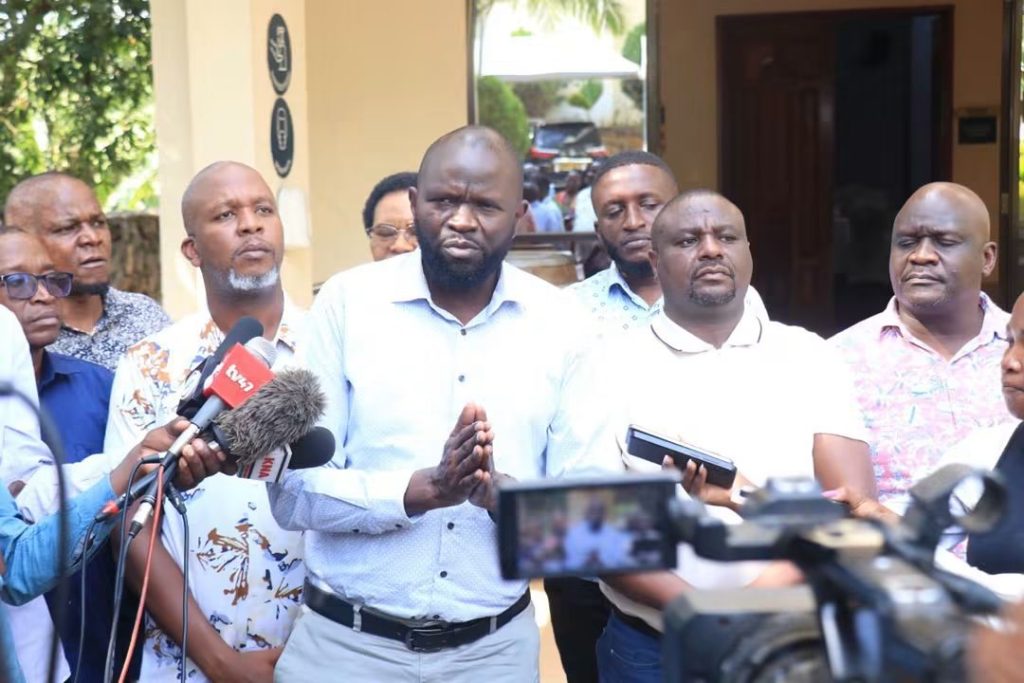
The issues emerged as MPs examined Auditor-General’s reports covering the 2020/21 to 2024/25 financial years during a retreat in Kisumu.
The committee, chaired by Luanda MP Dick Maungu, questioned whether the distribution of textbooks was based on accurate and up-to-date enrolment figures.
“We have seen a school that received 400 and 506 extra books,” Maungu told journalists after Thursday’s proceedings.
“The question is, when you receive extra numbers, does it mean there is a school somewhere that does not have books?” he asked.
The committee plans to summon the Kenya Institute of Curriculum Development (KICD) to explain how textbooks are allocated and why some schools receive more books than they require.
Maungu said the government needed to ensure schools in remote areas, including Mandera and Turkana counties, received adequate learning materials.
“We expect KICD to have the right data to ensure that the books supplied are enough for the students who are there,” he said.
The committee also heard that some schools had millions of shillings in unpaid fees, with some debts dating back to 2010.
Maungu said school administrators faced a dilemma because they were expected to recover outstanding fees while complying with government directives not to withhold students’ certificates over unpaid fees.
“We have advised them that they don’t need to hold a certificate for the learner because this student wants to join university or college. On the other side, they need to have this money paid,” he said.
He suggested that schools prepare schedules of long-standing fee arrears and submit them to the Ministry of Education for consideration.
Some of the outstanding amounts, he said, were linked to delays in government capitation payments.
“We call upon the government to ensure that it supports the head teachers by making their work easier by sending capitation as it should,” he said.
The committee also criticised school boards for taking loans from commercial banks to finance construction and other projects without the required approvals.
Maungu cited Ng’iya Girls High School, which had previously obtained a bank loan of about Sh50m towards a project estimated to cost about Sh150m.
He said school borrowing needed to be strictly controlled to prevent public institutions from accumulating unsustainable debts.
“If you allow principals to keep borrowing money left, right and centre, we shall enter into a total mess,” he said.
The committee was told that the Ng’iya Girls loan had since been cleared.
However, Maungu said the school had not provided evidence that it obtained the necessary approvals from the Ministry of Education and National Treasury before taking the loan.
“The law is very clear. No principal can simply walk into a bank and take a facility. There should be approvals from the Ministry of Education and Treasury,” he said.
The committee plans to make recommendations to Parliament on how borrowing by public schools should be regulated.
MPs also questioned why some national schools did not have qualified procurement officers despite being subject to public procurement laws.
Maungu said national schools were public institutions and were therefore required to comply with the Public Procurement and Asset Disposal Act.
“It is unfortunate that some of our schools procure as if they are procuring for private entities,” he said.
He said schools should have qualified procurement specialists to oversee the purchase of goods and services.
For smaller schools unable to employ full-time procurement officers, he suggested that the Ministry of Education could provide support through its sub-county structures.
The committee said the concerns raised during its hearings would be included in a report to Parliament, alongside recommendations to strengthen financial management and accountability in public schools.
Maungu said the exercise marked a new level of parliamentary scrutiny of secondary schools.
“For the first time ever in this country, this committee will be taking on the books of high schools,” he said.
The committee has begun with national schools, classified as C1 institutions, before examining reports from other categories of secondary schools.
There are about 120 to 130 national schools, according to Mr Maungu.
The scrutiny forms part of Parliament’s oversight of public funds and its examination of recommendations contained in reports by the Auditor-General.









Leave a comment