

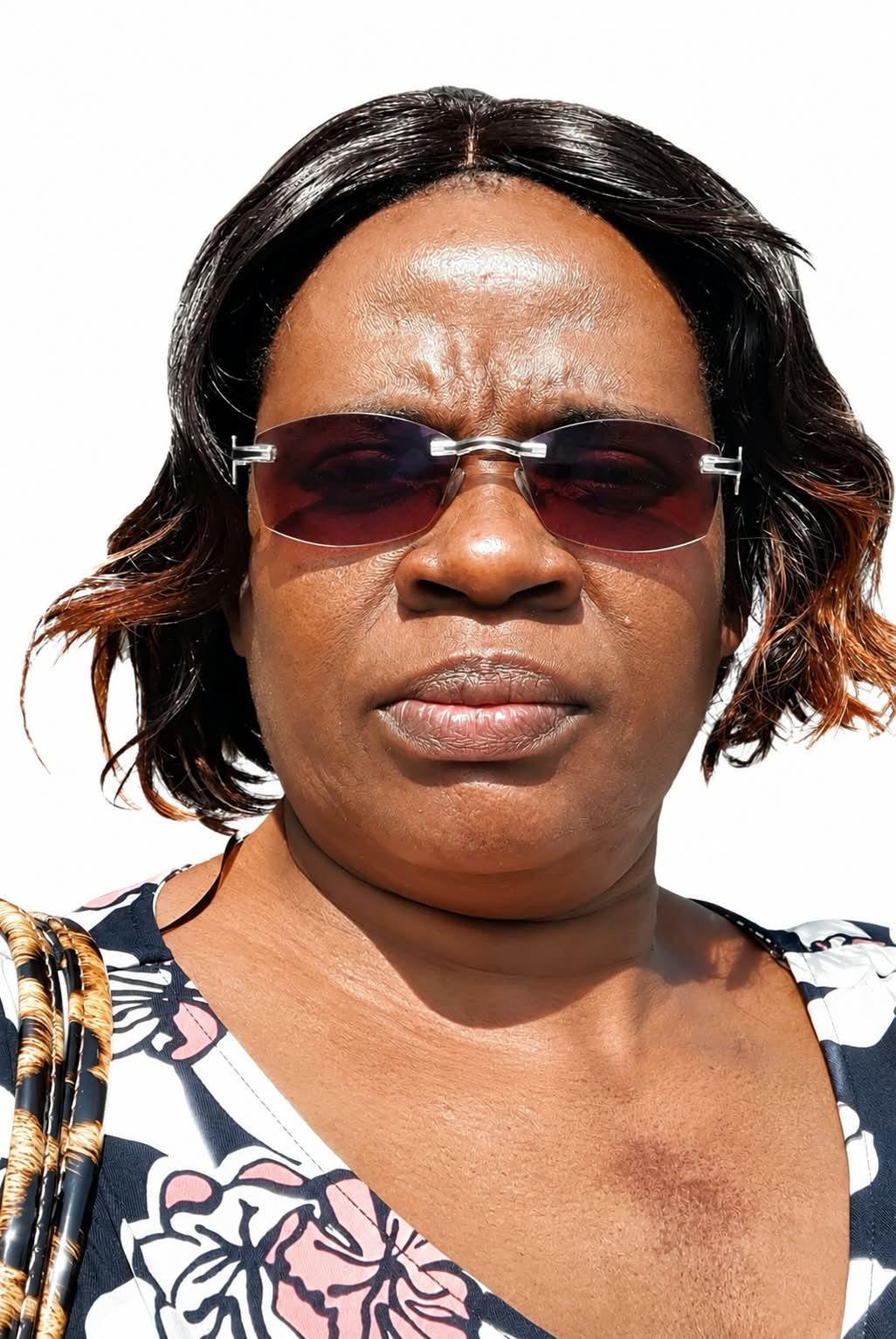
As Kenya hurtles toward the 2027 general election, President William Ruto faces a decision that will shape not only his re-election prospects but also the strategic direction of his second-term agenda.
The choice of a running mate is rarely incidental in Kenyan politics, it is an intent, a coalition signal, and a governing philosophy rolled into one.
While conventional wisdom dictates that the deputy presidential nominee must deliver ethnic balance, regional appeal, and grassroots mobilisation, the political terrain in 2027 is anything but conventional.
The realignment that followed the late Raila Odinga’s passing, ODM’s pivot toward the Kenya Kwanza administration, and the emergence of new opposition alliances have fundamentally redrawn the electoral map.
It is within this fluid context that Dr Renish Achieng Omullo emerges as an unconventional but compelling candidate, one whose value extends far beyond the traditional arithmetic of tribe and turnout.
President Ruto’s first term has been defined by a relentless focus on economic diplomacy, bottom-up development, and regional engagement.
His “Hustler Nation” narrative resonated with millions, but a second term demands a different kind of leadership one capable of consolidating gains, deepening international partnerships, and translating diplomatic goodwill into tangible investments and jobs.
Her appointment in 2016 as South Sudan’s special envoy to Germany placed her at the intersection of African diplomacy and European commerce.
Based in Berlin, she navigated complex international and regional affairs at a time when South Sudan’s stability was and remain critical to East African security.
Her subsequent work with German engineering firm Celle Brunnenbau GmbH gave her hands-on exposure to business development in African markets, an experience few Kenyan politicians can claim.
This is not a résumé built for boardrooms, chancelleries, and negotiation tables. And that may be exactly what a second-term Ruto administration needs.
Perhaps the most politically significant element of Dr Omullo’s profile is her association with the Odinga political establishment.
Her recent appointment as adviser on regional and international affairs to ODM leader Oburu Oginga places her within the inner circles of a party that has historically been Ruto’s most formidable electoral adversary.
Yet ODM has since crossed the aisle. In July, Oburu Oginga declared that the party would not field a presidential candidate in 2027 and would instead back Ruto’s re-election bid.
The subsequent rapprochement between ODM and the United Democratic Alliance (UDA) signals a profound realignment, one that demands a running mate capable of embodying this new political détente.
Her roots in Homa Bay, deep within the Luo-Nyanza heartland, give Ruto a credible entry point into a region that has historically rejected him. But she is not a tribal chieftain, nor does she pretend to be.
She is a technocrat with political lineage a combination that allows Ruto to signal reconciliation without appearing to capitulate to factional interests.
She cannot, and should not, be positioned as Raila Odinga’s successor. That mantle is too heavy and too personal to transfer.
What she can offer is a credible narrative of partnership one that says the old rivalries are giving way to a new era of national focus on development, diplomacy, and delivery.
Kenya has made notable strides in women’s political participation, yet the deputy presidency remains an overwhelmingly male office.
Dr Omullo’s nomination would not be tokenism, it would be a statement that leadership is measured by competence, not gender. It would resonate with professional women across the country who see themselves underrepresented in the highest echelons of power.
More importantly, it would allow Dr Ruto to frame his ticket around merit, international exposure, and a forward-looking vision of governance qualities that appeal to the growing urban, educated, and economically mobile demographic that increasingly influences electoral outcomes.
No honest assessment of Dr Omullo’s candidacy can ignore its limitations. She is not a grassroots mobiliser in the mould of seasoned political organisers.
She does not command a vast party machine, nor does she have a track record of managing the rough-and-tumble of ward-level campaigns. Kenyan elections are won through agents, boda boda networks, church visits, and cattle dips not résumés.
Ruto’s coalition would therefore have to supply the machinery. Her role would be strategic and symbolic, not operational. That is a gamble, but it is a calculated one.
If the President’s priority is to maximise turnout in vote-rich regions, a more conventional running mate with a proven ethnic or regional base may be the safer bet.
But if Ruto believes that the 2027 election will be won on governance records, economic performance, and coalition credibility rather than raw ethnic arithmetic, then Dr Omullo becomes a much more compelling option.
Dr Omullo offers President Ruto something rare: a running mate who speaks the language of diplomacy and investment, who carries political credibility in a historically hostile region, and who embodies a modern, inclusive vision of Kenyan leadership.
She is not a vote bank. She is a bridge to Nyanza, to ODM, to the international community, and to a growing constituency of Kenyans who are weary of ethnic polarisation and hungry for competent, globally aware governance.
The question for Ruto is not whether Dr Omullo can win him the election single-handedly. No running mate can.
The question is whether she can help him redefine what a presidential ticket looks like in a rapidly changing political environment and whether that redefinition will inspire enough confidence, hope, and trust to secure a second term.
On balance, the case for Dr Omullo is not obvious, but it is compelling. It is a case built not on the politics of the past, but on the possibilities of the future.
And in 2027, that may be exactly the kind of choice Kenya needs.
The writer is a seasoned journalist and political commentator.










Leave a comment