

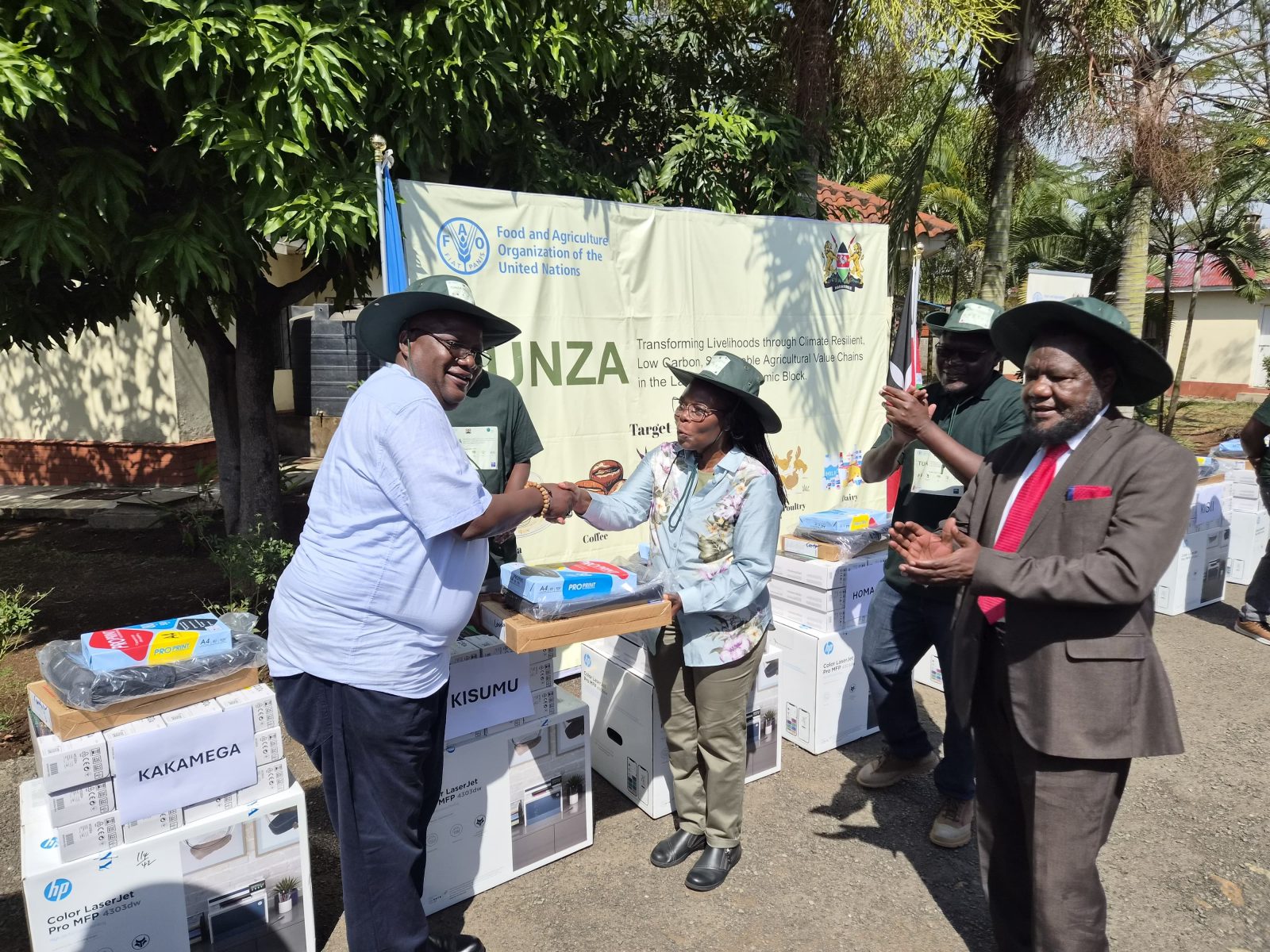
The Food and Agriculture Organization (FAO) of the United Nations has provided laptops, printers and more than 240 tablets to officials working in Lake Region, as part of efforts to improve climate-resilient farming.
The equipment will be used by county officials, monitoring and evaluation teams and Farmer Field School facilitators involved in the Transforming Livelihoods through Climate Resilient, Low Carbon, Sustainable Agricultural Value Chains in the Lake Region Economic Block (TUNZA) project.
The project covers 14 counties and aims to reach about 143,000 smallholder farmers.
FAO Representative to Kenya Farayi Zimudzi said the tablets would help modernise agricultural extension services and improve the way information reaches farmers.
“The tablets are an important investment in the digital transformation of extension and monitoring services,” she said.
Digital Farmer Field School manuals have already been installed on the tablets, allowing facilitators to access training materials while working directly with farmers.
The devices will also be used to register farmers, collect and transmit field data, monitor activities and provide access to climate information.
The Farmer Field School model is at the centre of the TUNZA project. Rather than relying only on classroom-based training, farmers learn through practical activities, including testing farming methods, observing results and sharing experiences.
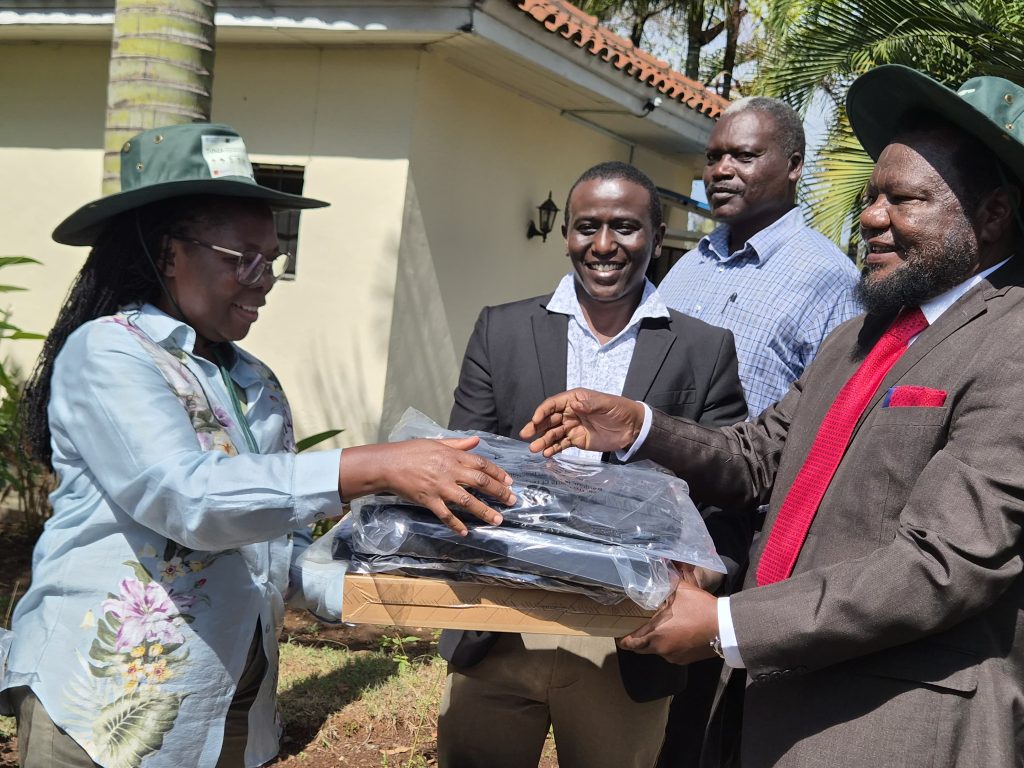
FAO Assistant Representative for Kenya, Hamisi Williams, said the equipment and agricultural inputs were intended to go beyond simple distribution.
“The objective is therefore not merely distribution. The objective is learning, replication and adoption,” he said.
Farmer groups are being provided with materials such as seeds and other planting materials, registers, pens, marker pens, flip charts and paper for practical exercises and group discussions.
Hamisi said farmers involved in dairy, poultry, coffee, tea, fruit trees and African leafy vegetables will also receive various agricultural inputs.
These include vegetable seeds for seed bulking, coffee and fruit-tree seedlings, agroforestry seedlings, chicks and starter feed, fodder and artificial insemination services for dairy groups.
Each of the 14 counties will have a designated learning centre for participating farmers.
Kisumu Deputy Governor Mathew Ochieng Owili said strengthening extension services and giving farmers access to practical knowledge would be important in responding to climate-related challenges.
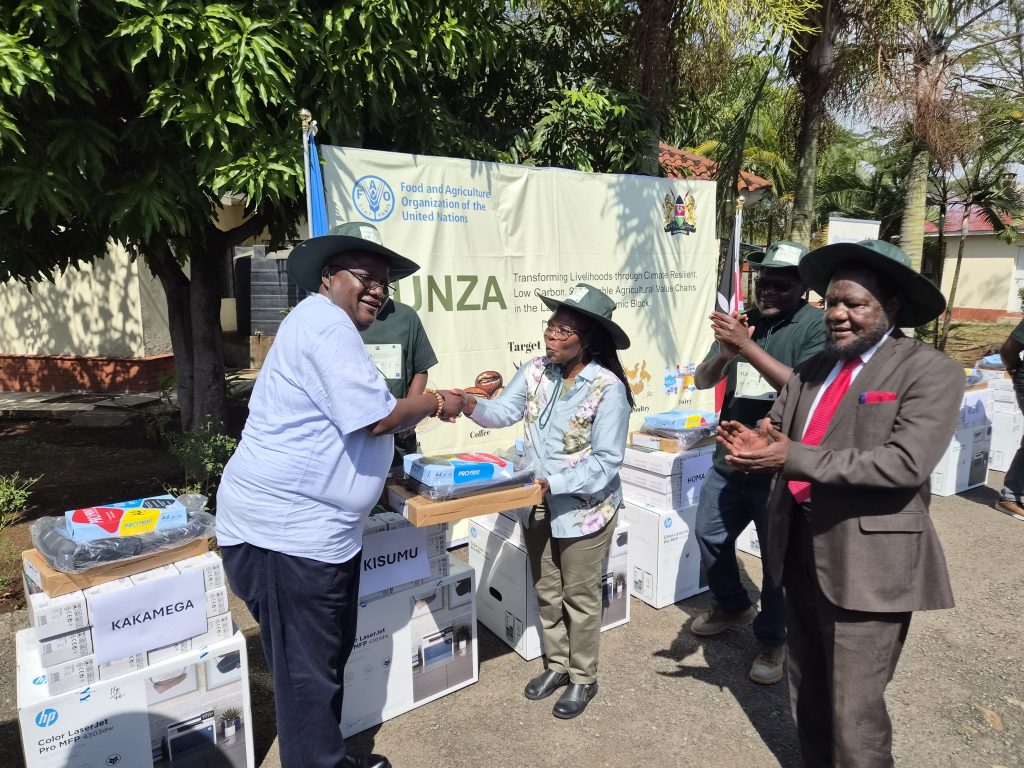
“This handover of equipment is a demonstration of investing in stronger extension systems, digital transformation, hands-on farmer learning and climate-resilient agricultural production to ensure food and nutrition security of our people,” he said.
TUNZA is funded by the Green Climate Fund, with additional financing from the governments of Denmark and Kenya, FAO and other partners.
The six-year project is designed to help farmers adapt to climate change while reducing emissions and losses associated with agricultural production.
Lake Region Economic Bloc (LREB) Chief Executive Victor Nyagaya said the region would need to make sure the investment produced lasting benefits for farmers.
He said the project should leave behind skills, expertise and systems that counties could continue using after the programme ends.
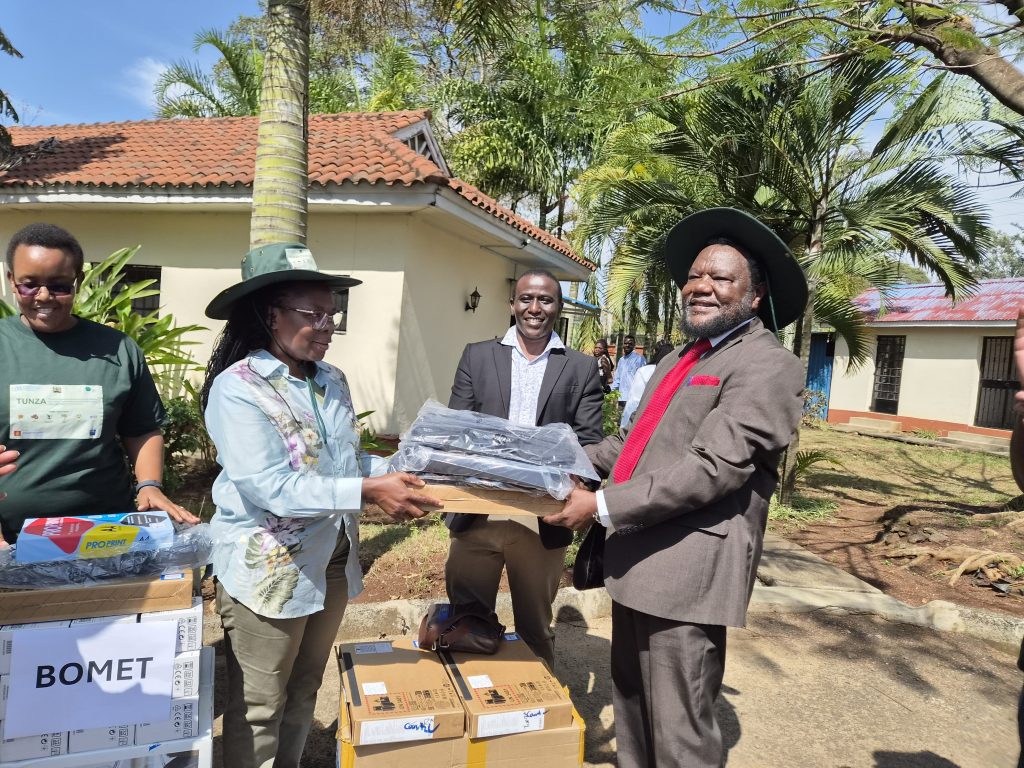
“The end game is, did we succeed? And did our farmers succeed? That is the end game,” Nyagaya said.
He said the project had a total cost of about Sh 6.5 billion although he stressed the importance of ensuring the resources translated into tangible benefits.
The project will support climate adaptation and mitigation technologies at different stages of farming, including production, harvesting, processing and marketing.
FAO will implement TUNZA as an accredited entity, while FAO and Agriterra will act as co-executing organisations.
The Kenyan government will implement activities it is co-financing. The project is also intended to develop approaches that could be replicated in other parts of Kenya after the six-year programme ends.








Leave a comment