

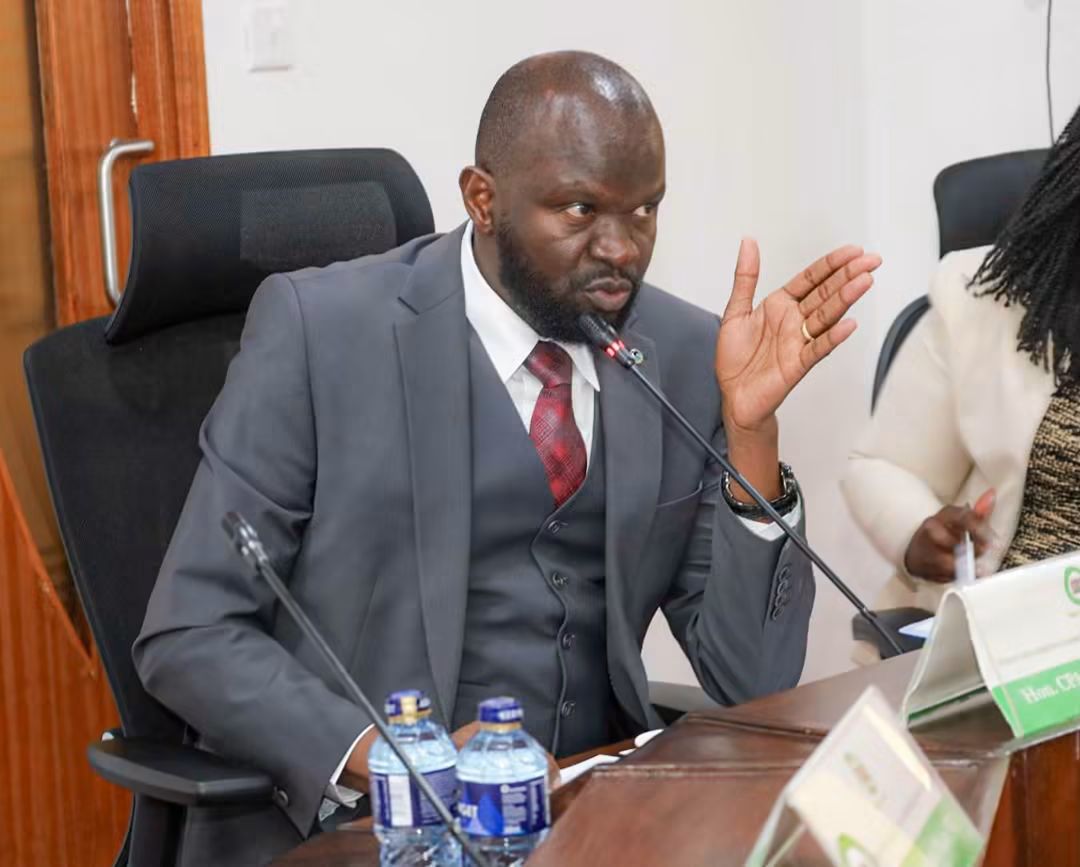
Lawmakers have ordered a girls’ high school to provide documents explaining a Sh1 million investment in the Nairobi Securities Exchange after questioning its low returns and the absence of key investment records.
The National Assembly Public Investments Committee on Governance and Education was examining the finances of Bishop Gatimu Ngandu Girls High School after the Auditor-General flagged Sh1.58 million in short-term investments in the school’s financial statements for the year ended June 2021.
Auditors said the school had not provided investment certificates or other supporting documents, making it impossible to verify the existence and completeness of the reported balance.
School Chief Principal Jane Njuguna told the committee on Tuesday that the Sh1.58 million comprised several balances, including Sh1 million invested in shares, while the remainder was held in different accounts.
She said the investment generated income for the school.
But lawmakers questioned the return after Njuguna said the Sh1 million investment had generated dividends of only Sh5,381 over a year.
“Can you imagine we have Sh1 million and this year you got Sh5,000?” committee chairman Dick Maungu asked.
The committee also sought to establish whether the investment had received the required approval from Kenya’s National Treasury.
Patricia Esipeya, representing the Auditor-General, told lawmakers that Section 119(2) of the Public Finance Management Act requires accounting officers to manage public funds responsibly and keep cash balances at a minimum, while public institution investments require Treasury approval through the relevant parent ministry.
Asked whether the school had obtained Treasury approval, Njuguna asked for more time to establish the details.
Maungu deferred the matter and directed the school to return with documents showing the investment’s approval, performance and ownership details.
“We need to provide that indeed there is value for money,” he said.

The MPs also questioned why the school was seeking financial contributions from parents while funds were invested in the stock market.
“Girls will continue asking parents for money, yet they have money sitting in a platform, and that money is not adding value to the school,” Maungu said.
Embakasi lawmaker Mark Mwenje said schools should focus on education rather than investment activities, while other committee members questioned the economic rationale for the investment.
The committee also asked the school to identify the companies in which it had bought shares.
Bursar Racheal Wambui said the investment remained active and that dividends were received through Absa and Centum, but she could not immediately identify the specific companies whose shares the school held.
Wambui said the investment had been made before 2010 and that she joined the school in 2022. She acknowledged that the returns appeared insufficient to provide value for money.
The Auditor-General’s representative said auditors had initially raised concerns because the school lacked investment certificates. Bank statements later confirmed that funds had been invested in the stock market, she said.
Esipeya said the investment had subsequently been transferred back to the school’s operational account while auditors were assessing the school’s response.
The committee ordered the school to submit investment records, evidence of Treasury approval, details of the shares purchased, minutes from relevant board and parents’ meetings and information on the investment’s performance.
Kiminini MP Maurice Kakai Bissau also called for former school officials who initiated the investment to appear before the committee and explain the decision.
The committee will reconsider the matter after receiving the requested documents.










Leave a comment