

At the shores of Lake Victoria, a quiet but dangerous disease is tightening its grip on everyday life. For many families in lakeside villages, the water that sustains them is also putting them at risk.
This comes as researchers now warn that climate change is accelerating the spread of Schistosomiasis commonly known as bilharzia a neglected tropical disease that often goes unnoticed until it has already caused serious harm.
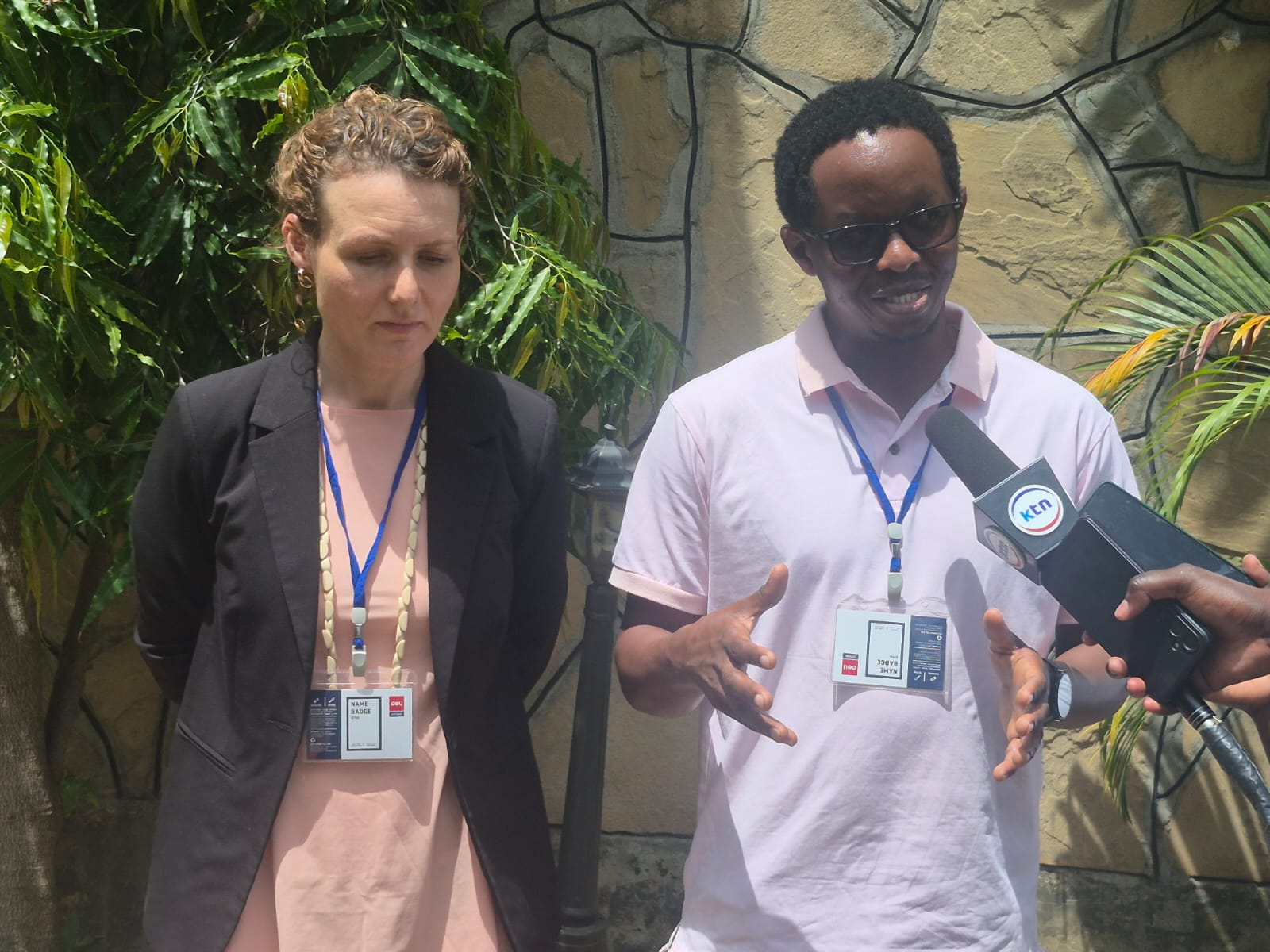
Uppsala university in Sweden Prof. Sarah Dickin who was the part of a research team working with communities said Bilharzia is transmitted through contact with contaminated water where tiny parasitic worms are released by freshwater snails.
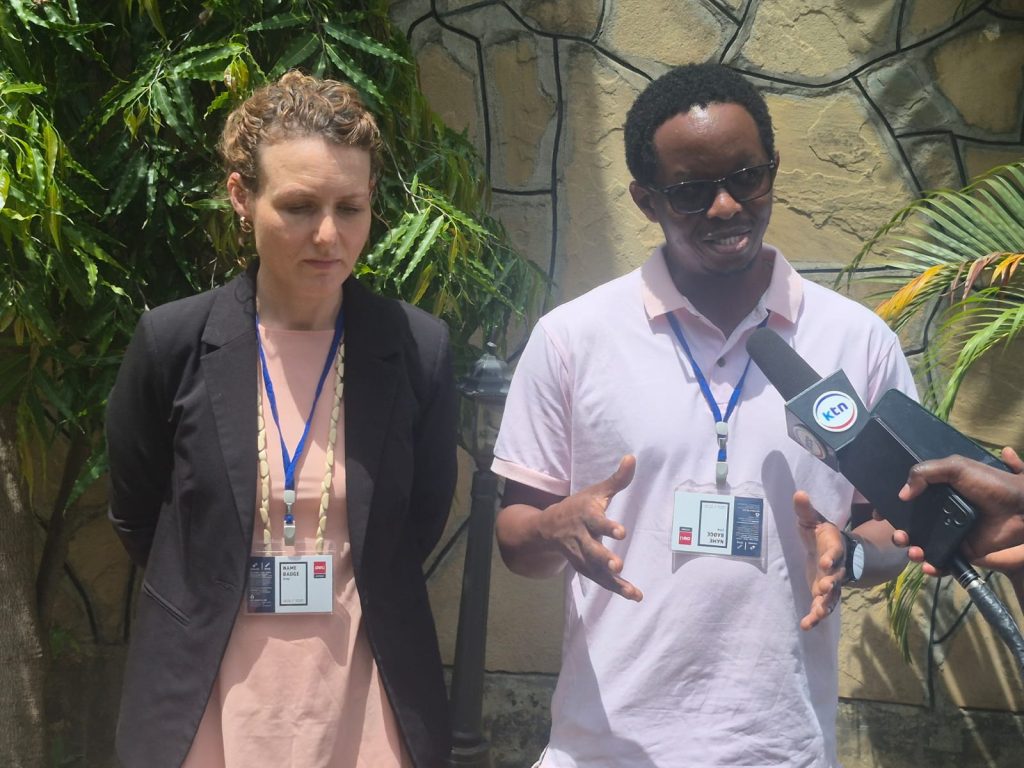
Uppsala university, Sweden during a press briefing on Bilharzia disease and interventions towards prevention and treatment in Kisumu. Photo by Maurice Alal
These snails thrive in changing environmental conditions conditions that scientists say are being reshaped by climate change.“We are focusing not just on treatment, but on empowering communities and understanding how climate risks are shaping infection patterns,” Dickin said.
According to Chester Kalinda of the University of Global Health Equity, rising water levels and flooding are disrupting ecosystems in ways that increase infection risks.
“When heavy rains come, many snail habitats are washed away,” he said. “But as the water recedes, we see a rapid increase in snail populations. This creates more opportunities for the parasites to spread, especially in areas where people frequently come into contact with the water.”
For women in rural communities, the danger is deeply personal. Daily responsibilities fetching water, washing clothes, tending to animals, or small-scale fishing bring them into repeated contact with potentially infected water.
For Joyce Auma, this risk became a reality. The mother of three from a lakeside village recalls spending long hours in the waters of Lake Victoria while buying fish to sell in nearby markets. “I would stand in the water for hours waiting for the fishermen to arrive,” she said.
Not long after, Joyce began experiencing persistent abdominal pain and fatigue. “At first, I thought it was just exhaustion,” she explained. “But when I started passing blood in my urine, I knew something was wrong.”
She was later diagnosed with bilharzia a disease she had never heard of before.
“Women are among the most exposed, yet they are often overlooked in traditional treatment programs,” said Urbanus Azupogo, a PhD candidate involved in the project. “Most interventions focus on schoolchildren, but adults especially women face constant risk.”
The disease can be difficult to detect. It presents in different forms, including urinary and intestinal infections, with symptoms that may not immediately point to bilharzia.
This has contributed to its status as a “neglected” disease, often overshadowed by illnesses like malaria and HIV/AIDS.
In response, researchers are turning to innovative, community-driven solutions. One such effort is the use of the WhatsApp as a simple health information system.
The tool allows community health promoters to share information, send alerts, and connect households with treatment options. “The idea came directly from the community,” said Azupogo.
“People wanted an affordable and accessible way to get information. With this system, they can learn about the disease, know when drugs are available, and even receive climate related alerts.”
Local volunteers have also been trained to identify the snails that carry the parasite, giving communities a new level of awareness about environmental risks.
Despite these efforts, challenges remain. Limited awareness, shifting climate patterns, and gaps in healthcare access continue to complicate the fight against bilharzia. Experts estimate that millions of people in Kenya alone are at risk.
Still, there is cautious optimism. “This project shows that when communities are involved, solutions become more practical and sustainable,” said Dickin. “It’s about making sure no one is left behind not women, not fishermen, not anyone who depends on these waters.”
As climate change continues to reshape the region, the battle against bilharzia is becoming not just a health issue, but a story of resilience one where science and community must work hand in hand to turn the tide.















Leave a comment